Resources & Guides
A Tokyo Itinerary for First-Timers: 4 Days Without the Cross-City Rush
A four-day Tokyo plan organised by neighbourhood, with flexible food stops and realistic travel time.
Max
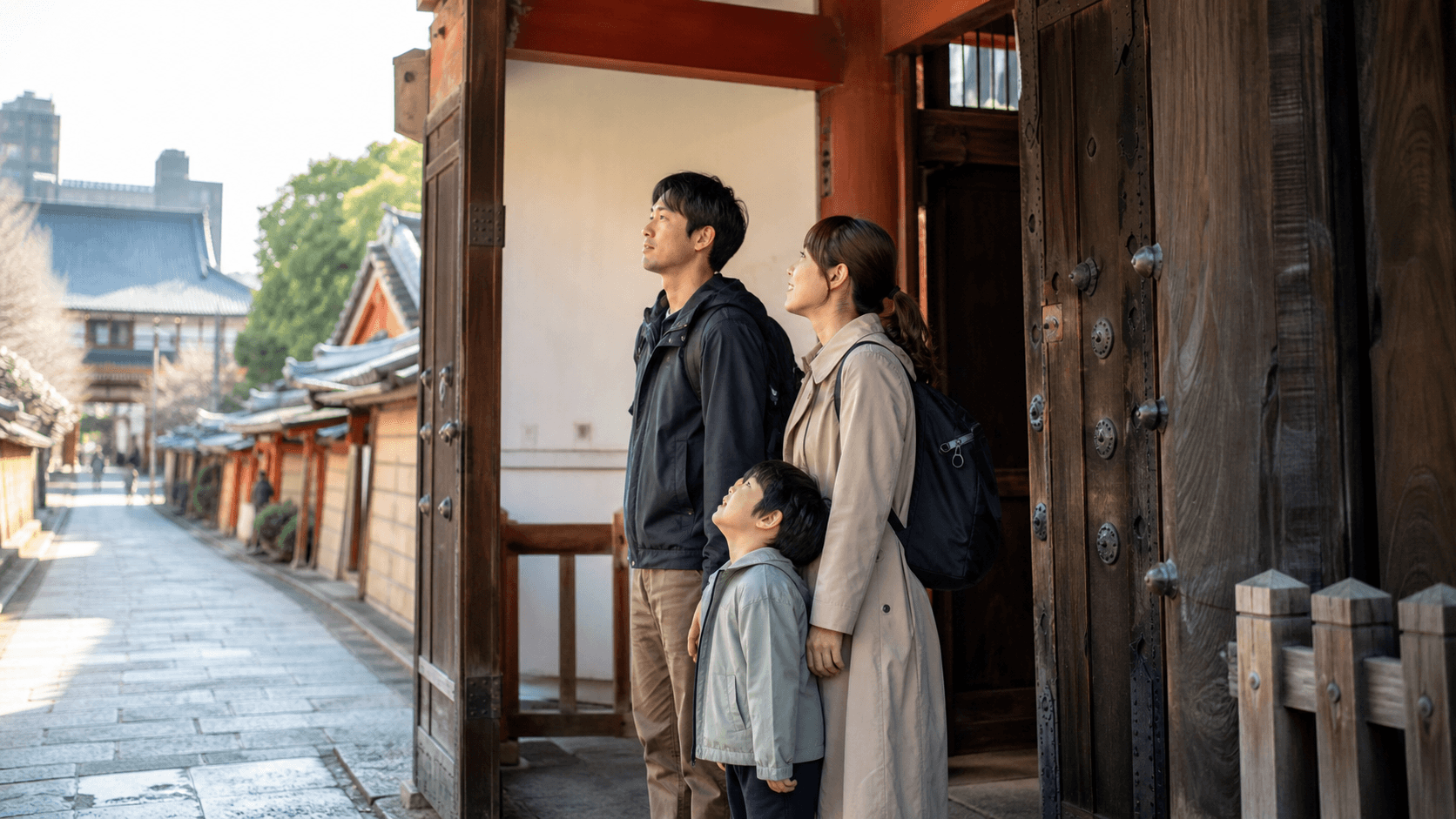
Tokyo rewards curiosity more than efficiency. You can plan every train perfectly and still find the best part of the day in a tiny shop, a garden bench or a street you only entered because lunch had a queue.
This four-day itinerary gives a first visit enough structure to feel confident and enough empty space to feel alive. Each day stays within a broad part of the city, so energy goes into Tokyo rather than constantly navigating across it.
Day 1: Asakusa and Ueno
Begin at Senso-ji and the surrounding streets before moving towards Ueno. Choose one museum rather than treating the park as a single photo stop. End around Ameyoko or return to the hotel early if this is arrival day.
Day 2: Meiji Jingu, Harajuku and Shibuya
Walk through Meiji Jingu in the morning, explore Harajuku and Omotesando, then reach Shibuya later in the day. If booking a viewpoint, allow buffer time and confirm the admission rules.
Day 3: Tokyo Station, Marunouchi and Ginza
Use central Tokyo for the station architecture, nearby palace grounds and a shopping or food interest in Ginza. This day is easy to adapt in poor weather with galleries, shops and station complexes.
Day 4: Shinjuku and your personal Tokyo
Pair Shinjuku with one focused interest: animation, design, coffee, gardens, baseball, music or a specific neighbourhood. The final day should feel personal rather than like leftover sightseeing.
How to adapt the itinerary
For families: reduce the number of districts and add playground or indoor time. For food-focused travellers: plan one restaurant reservation and keep the rest flexible. For shoppers: move purchases later in the trip. For couples: retain one unhurried evening rather than stacking observation decks.
Tokyo transport basics
Use an IC payment option where eligible, keep digital and offline maps, and save station exits. Welcome Suica Mobile may be relevant to some international visitors with compatible devices; check JR East's official eligibility and operating guidance. It may also appear within HeyMax's current Japan campaign, but the underlying service and terms remain JR East's. The official GO TOKYO itinerary is another useful source for current route ideas.
For the few attractions that need advance tickets, platforms such as Klook, KKday or GetYourGuide may be eligible through HeyMax depending on the live offer. Compare the actual ticket, time slot and cancellation terms before choosing the booking route.
Adjust for jet lag, weather and energy
If the first morning begins at 5am, use it. Asakusa is especially rewarding before the crowds, and an early breakfast can become part of the memory. If rain arrives, move a museum or shopping complex forward and save the garden for another day. The four neighbourhood clusters can change order without breaking the trip.
Pay attention to how the group feels after lunch. Tokyo's scale can hide fatigue until the evening. Dropping one stop often makes the remaining hours better, especially for families or anyone adjusting after an overnight flight.
Let meals anchor the neighbourhood
You do not need three restaurant bookings every day. Pick one meal that matters and let the rest emerge from where you already are. A relaxed lunch can reset a busy sightseeing day; an unplanned izakaya can be more memorable than travelling across the city for a famous queue.
If a specific dining experience requires a reservation, TakeMe may appear within the current Japan campaign on HeyMax. Confirm restaurant availability, inclusions and cancellation terms through the booking flow. The point is to make a meal you already want easier to arrange.
Use bookings sparingly
Reserve the viewpoint, museum or immersive experience that would genuinely disappoint you to miss. Platforms such as Klook, KKday or GetYourGuide may be eligible through HeyMax depending on the live offer. Compare the exact time slot and operator terms, then leave the rest of the day loose enough for Tokyo to participate in the plan.
Frequently asked questions
Is four days enough for Tokyo?
It is enough for a strong first overview, but not every major district or day trip.
Should I take a day trip on a first visit?
Only when the destination is a real priority. Otherwise, Tokyo can comfortably fill all four days.
How many restaurant reservations should I make?
Reserve only the meals that are central to the trip. Too many fixed bookings can make neighbourhood days brittle.
Leave room for Tokyo
Organise the city by adjacent districts and use only a few fixed bookings. The spare time is not wasted time; it is what lets a first visit feel like a holiday rather than a transfer exercise.
For choosing the sights themselves, use Top Attractions in Tokyo. The detailed reservation guidance below supports the existing four-day route without replacing that shortlist.
Tokyo Attraction Tickets: What to Reserve Before You Build the Itinerary
Book the experiences you would genuinely regret missing, then arrange the rest of Tokyo around their confirmed locations and entry times. A neat four-day sightseeing plan can fall apart if its museum ticket is unavailable or its only observation-deck slot clashes with a cross-city transfer.
You do not need to reserve every hour. You need to know which attractions have a fixed release schedule, which require a particular entry time, and what happens if your plans change. Ghibli Museum, teamLab Planets and SHIBUYA SKY illustrate three different decisions.
The operator rules below were checked on 14 October 2026. Check the exact ticket and seller again before paying. This guide is about reservation order, not a promise that tickets are currently available.
Make a short must-do list before choosing dates
Ask everyone travelling to name the experience that would matter most to them. Then separate the resulting list into must-do, would-enjoy and optional. If everything is a must-do, decide what you would drop if two bookings clash.
For each paid attraction, record:
Its exact name and location
The dates you will actually be in Tokyo
Whether admission is tied to a date and time
When the relevant tickets become available
The seller’s change, cancellation and late-arrival rules
Any age, access or other requirements relevant to your group
Use the exact attraction name. Ghibli Museum in Mitaka is a specific venue, and a teamLab ticket needs the correct exhibition and location. Similar names in a search result are not enough to establish that you are buying the intended experience.
The official GO TOKYO attraction directory provides a starting point and links to ticket operators. Follow through to the current seller terms rather than making a payment decision from a short listing description.
Put fixed-release tickets on the calendar first
Ghibli Museum admission is by advance reservation, with no ticket sales at the museum. Its overseas Lawson ticket route opens at 10am Japan time on the tenth of each month for the following month. Tickets specify an entry date and time. Check Ghibli Museum’s official ticket page.
For travellers in Singapore and Hong Kong, 10am in Japan is 9am at home. Save both time zones in the reminder so that the release does not get confused with your phone’s location setting after you travel.
Under that published monthly schedule, January tickets would normally become available on 10 December. Recheck the operator page as the date approaches; a recurring sales rule is not a guarantee about future operating dates or inventory.
Choose a few acceptable visit dates before sales open. If the first choice is unavailable, you can make a deliberate choice instead of buying a slot that breaks the holiday. Also decide whether the trip still works without that attraction. If it does, keep a good alternative day ready rather than chasing unfamiliar resale links under pressure.
Reserve a time you can actually reach
An entry slot is a commitment to be at a particular entrance, not merely somewhere in the district. Build the travel to that entrance into your plan.
Start with your accommodation and the activity immediately before the booking. Check the route for the intended day and time, then add room for finding station exits, walking, toilets and the needs of the group. A transport estimate should not be the entire buffer.
For a family or a group, ask whether everyone can comfortably follow the same pace. It is often easier to book one important attraction in a half-day and keep the surrounding activities loose than to recover from a sequence of narrowly spaced appointments.
Be especially cautious on arrival day. The flight’s scheduled landing time does not tell you when you will be through the airport, at the hotel or ready for a museum. If an arrival-day booking is essential, understand what you would lose if you arrive late before you buy it.
Read teamLab Planets rules for the exact ticket channel
For entrance WEB tickets bought through the official teamLab Planets ticket store, DMM’s support guidance allows up to three date/time changes until two hours before the admission start time, subject to conditions and availability. It identifies exclusions including partial changes to an order, coupon tickets and sold-out replacement slots. Premium Pass timing differs, and buyers through other sellers should contact those sellers. Read the operator’s change rules.
The official store’s general help page says a purchased ticket cannot simply be cancelled or refunded because you can no longer attend. Operator-related closure handling is a separate matter. Check the Planets ticket-store help page.
The practical lesson is to distinguish changeable from refundable. A ticket can allow a move to another available date without offering a cash refund when your whole trip is cancelled.
Before buying, ask whether the permitted alternative dates would help you. If you have only one free afternoon in Tokyo, a date-change feature may have little practical value. If you have several open days, it may give you useful flexibility, provided the ticket and replacement inventory qualify.
Treat a rooftop booking as weather-dependent
SHIBUYA SKY has an outdoor experience, so decide how much the rooftop itself matters to you. The operator warns that weather conditions can cause the roof to close, including without advance notice. See SHIBUYA SKY’s admission precautions.
GO TOKYO also notes that when adult tickets are sold out online, they are unavailable at the counter too. Do not make turning up at the desk your backup for a sold-out adult slot. Read the official Tokyo visitor guide.
A weather plan should answer two separate questions. Would you still enjoy the available experience if the roof closes? And what do the exact ticket terms allow you to change or recover? Do not assume an outdoor closure automatically gives the refund you would prefer.
If sunset is important, check the relevant date and the available entry choices before booking. Avoid building the whole evening around an assumed sunset time copied from another season. Keep dinner flexible enough that queues or a slower visit do not turn an enjoyable view into a rush.
Build the itinerary around confirmed bookings
Once the important tickets are confirmed, place them on a map. Use their locations as anchors, then add nearby activities that can move without financial consequences.
Here is an illustrative planning pattern rather than a bookable schedule:
One day has the museum reservation and a flexible meal or walk nearby
Another has the immersive-art ticket and a light afternoon that can absorb delays
A Shibuya visit includes the observation deck if booked, with shopping or food around it
The remaining day stays open for weather, a missed neighbourhood or a slower start
Do not force these into a particular order until you know the actual ticket dates. A well-built itinerary can rearrange its day labels without adding repeated cross-city travel.
HeyMax’s four-day Tokyo itinerary provides neighbourhood-based planning context. Use it after the fixed bookings are known, then adapt the route to your hotel and group. You are choosing a workable sequence, not trying to complete a checklist of famous names.
Compare sellers on the ticket rather than the headline price
If an attraction is available through more than one authorised channel, compare the same date, entry time, age category and inclusions. A bundle, guided visit or premium product is not directly comparable with basic admission.
Then read the change and cancellation rules for that seller. Do not assume the operator’s direct-purchase conditions apply to a marketplace voucher. Check whether you receive an admission ticket immediately or must complete another reservation step.
Before payment, verify the total currency amount and any mandatory fees. Save the confirmation, the entry instructions and the contact route for problems. Check that the group has the correct number of tickets and that the dates use the format you expect.
If a checkout fails, establish whether an order exists before purchasing again. Look for the seller’s confirmation and account order status. Two pending card entries are not a reason to assume you have either zero tickets or two valid reservations.
Keep one useful backup for each important booking
A backup should preserve the shape of the day. It does not need to replicate the unavailable attraction exactly.
For a missed museum ticket, choose something your group would enjoy in an area that fits the rest of the holiday. For poor rooftop weather, plan an indoor activity or a relaxed meal in the same broad district. For a schedule change, identify an open half-day rather than trying to squeeze the attraction between two existing commitments.
Avoid buying two non-refundable experiences merely to keep both possibilities alive. The extra ticket cost can exceed the flexibility it creates. A useful alternative is often an unbooked activity that you would happily do if the original plan fails.
Recheck the next day’s reservations each evening. Make sure the confirmation is accessible, the entrance is saved, the phone is charged and anyone carrying the tickets knows the plan. Keep a copy of the booking details available if connectivity is unreliable, while following the seller’s requirements for presenting the actual ticket.
Check rewards only after the ticket fits
If an eligible attraction merchant offer appears in HeyMax, compare it with the direct option after the right venue, slot and terms are established. Confirm the current market, eligible product, earning conditions and booking route in the live offer.
Do not assume that every attraction or ticket type earns Max Miles, or that a rewards route gives access to sold-out inventory. A small potential reward should not persuade you to buy the wrong entry time or weaker cancellation terms.
The same order works for the rest of the trip: secure the experience you want at a total price and risk you accept, then use an eligible rewards opportunity where it fits naturally.
Frequently asked questions
Should I book attractions before hotels?
Start with workable travel dates and accommodation options, then identify any genuinely trip-defining attraction. Avoid making the entire trip non-refundable before you understand its ticket release and availability. The right order depends on which part of the trip is least flexible.
Does a ticket-release date guarantee I will get tickets?
No. It tells you when the stated sales process starts. Prepare acceptable alternatives and verify the order confirmation after purchase.
Can I rely on buying SHIBUYA SKY adult tickets at the counter?
Check availability first. GO TOKYO says an adult online sell-out also means no counter availability, so an unreserved walk-up is not a dependable backup.
Can I move a teamLab Planets ticket bought from another website?
Ask that seller and read its terms. The direct store’s change procedure should not be assumed to apply to a third-party booking.
How many timed attractions should I plan in one day?
Use the group’s pace and actual routes to decide. One important booking per half-day is a reasonable starting approach, not an operator rule. Leave enough unscheduled time to enjoy the city between reservations.